Picture this: you’ve poured your heart and soul into your small business, nurturing it from a mere idea into a thriving enterprise. But here’s the catch: are you prepared for the unexpected curveballs that could potentially throw your business off track? That’s where understanding the essentials of three small business insurance commercial policies comes into play.
Without the right insurance, your business is like a ship navigating stormy seas without a life raft. In this guide, we’ll delve into the critical types of insurance every small business should consider, ensuring you’re not just afloat but sailing smoothly. Ready to anchor your business in safety? Let’s dive in!
Understanding Three Small Business Insurance
Did you know that 40% of small businesses never reopen after a disaster? If you’re a small business owner, insurance isn’t just a nice-to-have; it’s your lifeline.
Why? Because without adequate insurance, you’re gambling with your business’s future. From property damage to liability claims, the risks are endless. But with the right insurance, you can protect what you’ve worked so hard to build.
The Importance of Having Three Types of Insurance
Most small businesses need a combination of three types of insurance to cover their bases. Generally, you’ll want to consider general liability, property insurance, and workers’ compensation. Each serves a different purpose and protects against unique risks.
For example, general liability protects you if someone gets injured on your premises. Property insurance covers damage to your business assets. Workers’ compensation is crucial if you have employees, as it covers their medical costs if they’re injured on the job.
Common Insurance Types Small Businesses Require
So, what types of insurance do small businesses commonly need? Let’s break it down:
- General Liability Insurance: Protects against claims of bodily injury or property damage.
- Property Insurance: Covers damage or theft of your business’s physical assets.
- Workers’ Compensation Insurance: Provides benefits to employees injured on the job.
These are the big three, but you might need others depending on your industry.
Potential Risks Without Adequate Insurance
Imagine this: A customer trips and falls in your store. Without insurance, you’re on the hook for all the medical bills and potential legal fees. The same goes for natural disasters—without property insurance, a single storm could cost you tens of thousands of dollars.
Here is the deal: Insurance isn’t just about safeguarding against the “what ifs.” It’s about ensuring your business can survive the unexpected.
| Type of Insurance | Coverage | Who Needs It |
|---|---|---|
| General Liability | Third-party bodily injury and property damage | All businesses |
| Property Insurance | Damage to business property | Businesses with physical assets |
| Workers’ Compensation | Employee injury coverage | Employers |
Pro Tip: Reviewing your insurance coverage annually can save you from unexpected gaps and keep your business protected.
Types of Insurance Policies
Did you know that 40% of small businesses will experience a property or liability loss within the next 10 years? That’s why choosing the right insurance is crucial for your business’s survival.
Insurance isn’t just about safety nets; it’s about smart planning. Here is the deal, there are three main policies you need to consider: General Liability, Professional Liability, and Property Insurance. Each comes with its own features and benefits tailored for different needs.
General Liability Insurance
General Liability Insurance is your first line of defense. It’s designed to protect you from common risks that all businesses face.
- Saves you from costs associated with bodily injury.
- Covers property damage that occurs on your business premises.
- Protects against personal and advertising injury claims.
Pro Tip: If you interact with clients or customers face-to-face, this is a must-have.
Professional Liability Insurance
This insurance is critical if you offer professional services or advice. It’s also known as “Errors & Omissions” insurance.
- Provides coverage if you make a mistake or oversight that harms a client.
- Covers legal defense costs even if you are not at fault.
- Tailored policies available for specific industries.
Pro Tip: If you work in consulting, design, or technology, this is your safety net.
Property Insurance
If you own or lease physical space, Property Insurance is non-negotiable. It’s your shield against damage or loss.
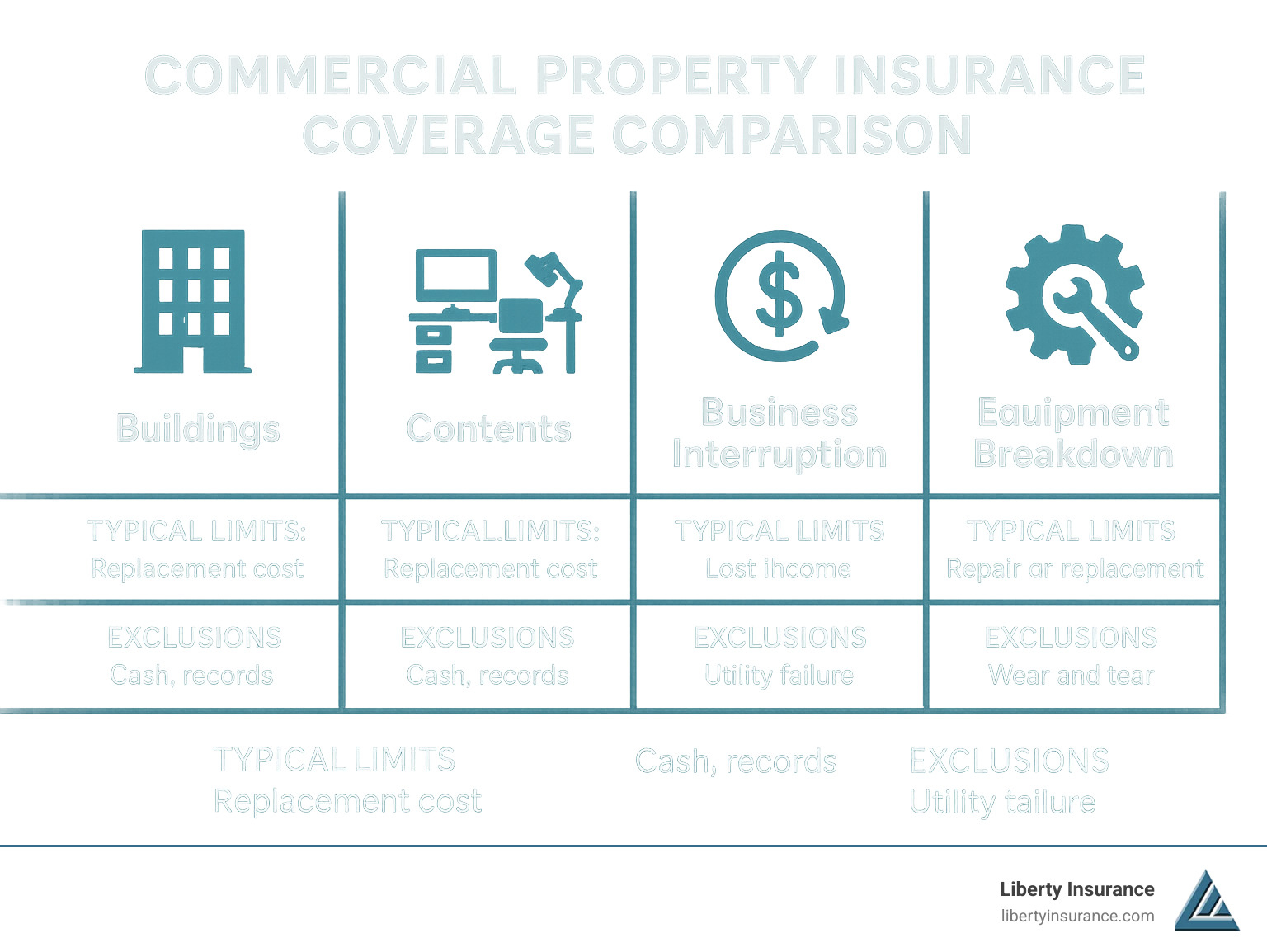
- Covers your building, equipment, and inventory.
- Protects against theft, fire, and vandalism.
- Includes business interruption coverage to keep you afloat if disaster strikes.
Pro Tip: Always calculate the replacement value of your assets when choosing coverage limits.
Comparing Coverage Limits
Understanding the differences in coverage limits is essential when selecting an insurance policy. The table below highlights key differences among these policies:
| Policy Type | Typical Coverage Limit | Common Exclusions |
|---|---|---|
| General Liability | $1 million per occurrence | Professional mistakes, employee injuries |
| Professional Liability | $1 million per claim | Intentional wrongdoing, bodily injury |
| Property Insurance | Actual value or replacement cost | Flood, earthquake (unless specified) |
Choosing the right policy involves assessing your specific risks and understanding these coverage limits. But remember, the right insurance can be the difference between a minor hiccup and a business-ending disaster.
Key Benefits of Business Insurance

Ever wonder why small businesses need insurance? It’s not just a safety net; it’s a lifeline.
Businesses face risks every single day. Having insurance can mean the difference between thriving and surviving. Financial protection is crucial, especially when unexpected events strike.
Guard Against Financial Loss
Imagine a fire wipes out your store overnight. Without insurance, you’re out of business. But with it, you can rebuild. Insurance covers damages and keeps your finances intact.
Here is the deal: business insurance doesn’t just cover physical damage. It also protects against liabilities like lawsuits and injuries. When a customer slips and falls, you could be liable for thousands. Insurance ensures you don’t pay out of pocket.
Step-by-Step Guide to Filing an Insurance Claim
Filing an insurance claim can be daunting. But don’t worry, I’ve got a step-by-step guide for you:
- Notify your insurer immediately after an incident.
- Document everything: photos, videos, and witness statements.
- Complete necessary claim forms accurately.
- Submit your claim with all required documentation.
- Follow up regularly to expedite the process.
Pro Tip: “Keep a digital copy of all important documents to streamline your claim process.”
Real-Life Scenarios of Insurance Success
Consider a bakery hit by a flood. Their insurance covered property damage and helped them reopen in weeks. Another example: a tech startup faced a cyber-attack, but insurance covered recovery costs, saving them from financial ruin.
These stories aren’t just anecdotes. They’re real-life saviors for businesses. Insurance does more than pay bills; it empowers businesses to recover and grow stronger.
Cost Factors in Business Insurance
Think your business insurance is too expensive? You’re not alone. Many small business owners are overwhelmed by the cost of insurance. But what actually drives those costs up or down?
There are several factors that influence the cost of business insurance, and understanding these can help you make informed decisions. The type of business you run, its size, and the industry you’re in are all key players in determining your premium.
Impact of Business Size and Industry on Insurance Rates
Did you know that the size of your business can drastically affect your insurance rates? A small boutique with three employees will pay much less than a bustling café with twenty. The number of employees influences your liability exposure and thus your premium.
Industry also plays a crucial role. For example, a tech startup might have lower premiums compared to a construction company. Why? Because construction is deemed higher risk due to the nature of the work. Insurance companies assess the risk associated with your industry before setting a price.
Methods to Reduce Insurance Costs
Looking for ways to cut down on insurance costs without sacrificing coverage? Here’s the deal: it’s totally doable.
- Combine policies to get discounts.
- Increase your deductible to lower your premium.
- Improve workplace safety to reduce risk and claims.
- Regularly review and update your coverage needs.
Pro Tip: Always bundle your insurance policies. Many insurers offer discounts if you purchase multiple policies from them.
Cost-Saving Strategies for Small Businesses
Let’s dive into some actionable strategies to save on business insurance. These strategies not only help you save money but also ensure you have the right coverage.
| Strategy | Benefit |
|---|---|
| Bundle Policies | Lower premiums due to multi-policy discounts. |
| Increase Deductible | Reduce upfront premium costs by taking on more risk. |
| Implement Safety Programs | Fewer claims lead to lower insurance costs. |
| Annual Policy Review | Ensure coverage aligns with current business needs and risks. |
Legal Requirements and Compliance
Did you know that failing to have the right insurance can lead to hefty fines or even business closure? Insurance isn’t just a safety net; it’s often a legal requirement.
Small businesses need to navigate a maze of regulations to ensure they’re covered. The requirements can vary dramatically depending on where you operate. BUT here’s the deal, knowing these specifics can save you from future headaches and financial loss.
Understanding Regional Insurance Mandates
Every region has its own rules for business insurance, making it crucial to understand what’s required. For example, in some states in the U.S., workers’ compensation insurance is mandatory if you have employees. In contrast, other regions might require liability insurance for certain business types. Always check with local authorities to nail down the exact requirements for your area.
Ensuring Compliance with Insurance Standards
Adhering to compliance measures isn’t just about avoiding fines—it’s about safeguarding your business. Small businesses often need to follow strict guidelines to ensure their insurance policies meet legal standards. This means regularly reviewing coverage limits and ensuring policy documents are up-to-date and in line with legal changes.
“Failure to comply with insurance regulations can result in penalties that cripple your business.”
Conducting an Effective Insurance Audit
Want to make sure your business is in the clear? Conducting an insurance audit is your best bet. Start by gathering all current policies and reviewing them against local requirements. Look for gaps in coverage or outdated information. If you’re not sure where to start, consult with an insurance professional.
Pro Tip: Schedule regular audits at least once a year to ensure ongoing compliance and make adjustments as necessary.
Insurance Providers and How to Choose Them
Ever wondered why choosing the right insurance provider is crucial for your small business? You might think any provider will do. BUT, the truth is, not all insurance companies are created equal. That’s why selecting the right one can mean the difference between smooth sailing and a business nightmare.
Here’s the deal: You need to know what to look for when selecting an insurance provider. It’s not just about premiums. Consider their reputation, customer service, and claims processing speed. This ensures you’re not left in the lurch when you need them the most.
Criteria for Selecting a Reliable Insurance Provider
When it comes to choosing an insurance provider, you’re probably lost in a sea of options. How do you pick the right one? Focus on their financial stability, industry experience, and customer reviews. Check if they specialize in small businesses like yours. Providers with industry-specific expertise can offer more tailored coverage.
- Check their financial ratings from companies like A.M. Best or Moody’s.
- Look for providers offering comprehensive customer support, 24/7 if possible.
- Read online reviews and ask for recommendations from other small business owners.
Top Insurance Companies Offering Small Business Policies
Ready to dive into the options? Here are some of the top insurance companies that cater to small businesses:
- State Farm
- Hiscox
- Travelers
- The Hartford
- Nationwide
These companies are well-known for providing a range of coverage options that can be tailored to fit your specific needs. BUT, always ensure they align with your business requirements.
Comparing Providers Based on Customer Service and Claims Processing
You know what’s frustrating? Waiting forever for a claim to be processed. That’s why customer service and claims processing speed are essential. A company with excellent customer service helps you navigate through the complexities of insurance policy management.
| Provider | Customer Service Rating | Claims Processing Speed | Coverage Options | Premiums |
|---|---|---|---|---|
| State Farm | 4.5/5 | Fast | Wide Variety | $$ |
| Hiscox | 4.3/5 | Very Fast | Specialty Lines | $$$ |
| Travelers | 4.2/5 | Moderate | Comprehensive | $$$ |
| The Hartford | 4.6/5 | Fast | Extensive Coverage | $$$ |
| Nationwide | 4.4/5 | Fast | Broad | $$ |
Pro Tip: When in doubt, call their customer service line and see how they handle inquiries. This can give you a taste of their service quality.
Summary
As we wrap up this deep dive into three small business insurance commercial policies, remember that the right coverage can mean the difference between a minor setback and a major catastrophe. With the right insurance in place, you’re not just protecting your business today—you’re securing its future. So, don’t wait for the storm to hit; prepare now, and sail confidently into success!
Answers to Common Questions
What are the three essential types of insurance small businesses need?
The three essential types of insurance are general liability, professional liability, and property insurance. These cover a range of risks from third-party claims to protecting your physical assets.
How does business size affect insurance costs?
Generally, larger businesses face higher insurance premiums due to increased risks and greater asset values, whereas smaller businesses might pay less but need to ensure full coverage.
Can I change my insurance provider if I’m not satisfied with the service?
Yes, you can switch providers, but it’s crucial to ensure continuous coverage during the transition to avoid any gaps that might leave your business vulnerable.
What factors should I consider when choosing an insurance provider?
Consider the provider’s reputation, customer service, claims processing efficiency, and the comprehensiveness of the coverage options they offer.
How can small businesses reduce their insurance premiums?
Businesses can reduce premiums by increasing deductibles, bundling policies, implementing risk management strategies, and maintaining a good claims history.
